Laser Therapy for Frozen Shoulder

Laser Therapy for Frozen Shoulder

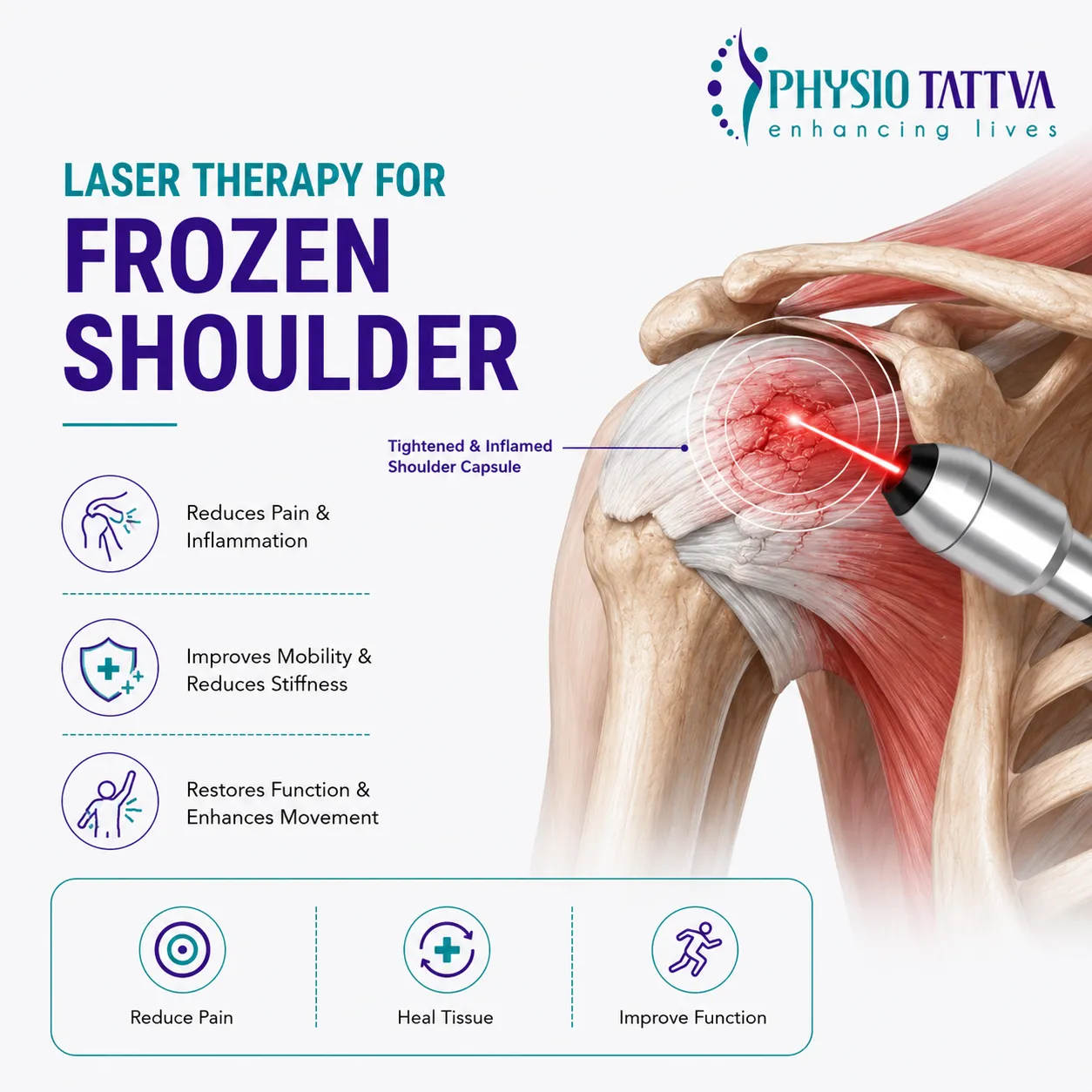
Laser therapy for frozen shoulder (adhesive capsulitis) is a non-invasive physiotherapy treatment that reduces pain and stiffness so shoulder movement can gradually improve during rehabilitation. It works through photobiomodulation to calm capsule inflammation and improve circulation, making stretching and strengthening exercises more comfortable. It is commonly used during the freezing and frozen stages to support safe mobility progression.

Sessions usually last 10 to 15 minutes, are painless, and require no downtime. Recovery is gradual and depends on consistent physiotherapy rather than laser therapy alone. It does not unlock the shoulder instantly but prepares tissues for progressive movement. A clinical assessment is necessary to confirm stage and suitability before starting treatment.

What Is Laser Therapy for Frozen Shoulder (Adhesive Capsulitis)?

Laser therapy for frozen shoulder (adhesive capsulitis) is a non-invasive physiotherapy treatment that uses focused light energy to stimulate healing in the stiff and inflamed shoulder capsule. The process, called photobiomodulation, helps calm irritation and improve the joint’s tolerance to movement.

Rather than forcing the shoulder to stretch, the therapy prepares the tissue for rehabilitation by reducing sensitivity and supporting circulation. As discomfort decreases, guided exercises can be performed more comfortably, helping restore movement gradually over time.
When Is Laser Therapy Recommended for Frozen Shoulder?

Laser therapy is typically recommended when pain and stiffness begin to limit daily shoulder movement, but the joint still has the potential to improve with conservative rehabilitation. A physiotherapy assessment helps determine whether the condition is suitable for non-invasive treatment.

Laser therapy may be considered if you experience:

  • Gradual loss of shoulder movement over weeks or months
  • Pain while reaching overhead or behind the back
  • Difficulty dressing, grooming, or lifting the arm
  • Night pain when lying on the affected shoulder
  • Early or mid-stage adhesive capsulitis stiffness
  • Pain that prevents participation in physiotherapy exercises

Some situations require medical evaluation first because structural or systemic causes must be addressed.

How Laser Therapy Works in Frozen Shoulder (Adhesive Capsulitis)?

Laser therapy works through a process called photobiomodulation, where specific light wavelengths penetrate the stiff and inflamed shoulder capsule. The light energy is absorbed by cells and helps increase cellular activity, which supports tissue repair and reduces irritation.

In frozen shoulder (adhesive capsulitis), the joint capsule becomes thick and sensitive. Laser therapy helps calm inflammatory responses and improves local blood circulation, allowing oxygen and nutrients to reach the affected tissues more efficiently. This creates a more favourable environment for healing.

As the capsule becomes less reactive, the shoulder can tolerate stretching and strengthening exercises better. Over repeated sessions, this gradual reduction in stiffness helps restore movement without forcing the joint beyond its comfort level.

What Are the Benefits of Laser Therapy for Frozen Shoulder?

Laser therapy is used to make the shoulder more comfortable so rehabilitation can progress gradually. By reducing irritation in the joint capsule, it helps patients tolerate stretching and strengthening exercises needed to restore movement.

During recovery, patients may notice:

  • Reduced pain during daily activities – Reaching, dressing, and grooming movements may feel easier as tissue sensitivity decreases.
  • Improved movement tolerance – The shoulder often handles guided exercises with less guarding or resistance.
  • Better sleep comfort – Night discomfort may lessen as inflammation settles and pressure sensitivity reduces.
  • Gentle, non-invasive care – Treatment does not involve injections, forceful manipulation, or medication.
  • Earlier participation in physiotherapy – Reduced irritation allows rehabilitation exercises to begin and progress more comfortably.
  • Support for gradual mobility return – Consistent sessions help the shoulder adapt to movement over time rather than sudden stretching.

The extent of improvement varies depending on the stage of adhesive capsulitis and participation in the rehabilitation program.

What to Expect During Laser Therapy for Frozen Shoulder Treatment?

Laser therapy sessions are gentle, controlled, and designed to calm inflammation so the shoulder can move again without protective muscle guarding. Instead of forcing mobility, the therapy prepares tissues to respond better to physiotherapy. It is always combined with guided rehabilitation exercises to gradually restore range of motion, reduce stiffness, and improve functional shoulder use in daily activities.

Typical session steps:

  1. The physiotherapist evaluates shoulder movement, pain behaviour, and identifies the stage of frozen shoulder.
  2. Protective eyewear is provided for both you and the therapist as a routine safety precaution.
  3. A handheld laser device is applied over the shoulder capsule and surrounding tissues.
  4. A gentle warmth may be felt while the treatment runs for about 10–15 minutes.
  5. Guided shoulder mobility exercises are performed immediately after the session to utilise reduced stiffness.
  6. Home exercises are explained so daily movement practice continues between visits.

Sessions are repeated over multiple appointments, allowing the shoulder to adapt gradually and comfortably to increasing movement.

How Long Does Recovery Take With Laser Therapy for Frozen Shoulder (Adhesive Capsulitis)?

Frozen shoulder heals slowly because the shoulder capsule becomes inflamed and tight. Laser therapy cannot instantly “unlock” the joint, but it reduces inflammation and pain early, allowing safe movement and physiotherapy to begin sooner. This significantly shortens the painful phase.

Typical Recovery Timeline by Stage

  • Freezing stage (painful stage): 2–9 months → laser therapy helps control pain within 2–4 weeks
  • Frozen stage (stiff stage): 4–12 months → mobility improves gradually with guided exercises
  • Thawing stage (recovery stage): 6–24 months → range of motion steadily returns

With consistent laser therapy and physiotherapy, many patients recover functional movement months earlier than natural recovery, which otherwise may take 1.5–2 years.

Why Laser Therapy Speeds Improvement

Laser therapy helps by:

  • Calming capsule inflammation
  • Relaxing surrounding tight muscles
  • Improving joint lubrication
  • Making stretching exercises tolerable
  • Preventing protective muscle guarding

This allows patients to move the shoulder earlier without severe pain, which is the key factor in shortening recovery.

Is Laser Therapy for Frozen Shoulder Safe? Risks and Precautions

Laser therapy is considered safe when performed by a qualified physiotherapist using correct intensity and protective protocols. The treatment is non-invasive and works to reduce inflammation in the shoulder capsule without damaging muscles, tendons, or joint structures.

Before starting therapy, it is helpful to understand which temporary responses are normal after treatment.

Common Temporary Effects May Include:

  • Gentle warmth around the shoulder joint
  • Mild soreness after movement or stretching
  • Slight skin redness that fades quickly
  • Temporary increase in looseness after stiffness releases

Some individuals may need modified treatment depending on their health condition.

Who Should Avoid or Delay Laser Therapy for Frozen Shoulder?

Laser therapy is generally safe, but certain situations require extra caution. Always share your medical history so treatment settings can be adjusted appropriately.

  • Cancer near the shoulder region: Not applied directly over malignant tissue
  • Pregnancy: Avoid direct exposure near the upper chest unless medically advised
  • Photosensitive conditions or light-reactive medications: Intensity may need adjustment
  • Severely reduced sensation or neuropathy: Settings modified to prevent unnoticed irritation
  • Recent shoulder fracture or post-surgical repair: Requires medical clearance before therapy

Clinical caution: A proper physiotherapy assessment is essential to confirm the adhesive capsulitis stage and ensure laser therapy is safely integrated into a structured rehabilitation plan.

Am I a Good Candidate for Laser Therapy for Frozen Shoulder?

Laser therapy is usually recommended when frozen shoulder (adhesive capsulitis) causes pain and stiffness, but the joint structures still respond to conservative rehabilitation. A physiotherapy assessment helps confirm the stage and decide if non-invasive treatment is appropriate.

Laser therapy may be suitable if you experience:

  • Shoulder pain while reaching, dressing, or lifting the arm
  • Progressive stiffness restricting overhead or behind-the-back movement
  • Early or middle stage frozen shoulder (freezing or frozen stage)
  • Night pain while lying on the affected shoulder
  • Difficulty combing hair or fastening clot
  • Tightness when rotating or raising the arm

You may need a different treatment approach if you have:

  • Recent shoulder fracture or dislocation
  • Complete rotator cuff tear requiring surgical opinion
  • Severe uncontrolled swelling after trauma
  • Suspected nerve injury causing persistent numbness or tingling
  • Active infection or inflammatory joint disease flare

A physiotherapist evaluates shoulder range, capsular tightness, movement pattern, and pain response to decide whether laser therapy should be combined with mobility exercises and stretching rehabilitation.

What Is the Treatment Process for Frozen Shoulder at Physiotattva?

At Physiotattva, frozen shoulder treatment follows a structured rehabilitation pathway designed to reduce pain, restore movement, and prevent long-term stiffness. Each stage focuses on safe mobility progression rather than forcing the joint.

  • Step 1: Comprehensive Assessment: Your journey starts at one of our clinics in Physiotattva Bangalore or Hyderabad with a thorough evaluation by an expert physiotherapist. We will assess your range of motion, pinpoint the source of pain, and confirm your diagnosis to create the most effective plan for you.
  • Step 2: A Personalised Treatment Blueprint: There is no one-size-fits-all solution. We design a holistic treatment plan where laser therapy for your frozen shoulder is a core component. This is integrated with targeted manual therapy to mobilize the joint and a gentle, progressive exercise program to rebuild strength and flexibility.
  • Step 3: The Treatment Session: During your session, a therapist will use a handheld device to apply the laser energy over the affected shoulder area. The treatment is completely painless; most patients report feeling nothing more than a gentle, soothing warmth. Each session is quick and convenient, typically lasting just 10-15 minutes.
  • Step 4: Empowered Recovery: Our goal is your long-term success. We will equip you with a tailored home exercise program to maintain the mobility gains you achieve in the clinic and empower you to take an active role in your recovery.

Is Laser Therapy a Standalone Treatment for Frozen Shoulder (Adhesive Capsulitis)?

No. Laser therapy is not used as a standalone treatment for frozen shoulder. It primarily reduces pain and inflammation so the shoulder can move enough to begin effective rehabilitation.

Frozen shoulder improves when mobility is progressively restored, which requires a combined physiotherapy approach. Laser therapy prepares the joint for movement, but lasting recovery depends on restoring capsule flexibility and muscle function.

Laser therapy is usually combined with:

  • Gentle joint mobilisation techniques
  • Guided stretching to improve capsule elasticity
  • Progressive shoulder strengthening exercises
  • Posture and movement correction training
  • Home exercise practice for daily mobility gains

Using laser therapy alone may provide temporary comfort, but without movement-based rehabilitation, stiffness commonly returns and recovery becomes prolonged.

Why Choose Physiotattva for Frozen Shoulder Treatment?

Physiotattva focuses on restoring shoulder movement, not just reducing pain. Frozen shoulder (adhesive capsulitis) requires stage-specific rehabilitation, and treatment is adjusted based on whether the shoulder is in the painful, stiff, or recovery phase.

Patients receive a structured care approach that includes detailed assessment, targeted laser therapy, and guided physiotherapy exercises. This combination helps control inflammation, improve capsule flexibility, and safely rebuild mobility.

Continuous monitoring ensures exercises progress at the right pace, preventing flare-ups while improving daily function. The goal is comfortable recovery, better shoulder use in everyday activities, and reduced chances of stiffness returning.

At Physiotattva physiotherapy clinics in Bangalore, Hyderabad, and Visakhapatnam- our latest clinic you receive personalised care tailored to your specific needs, ensuring effective results and comfort throughout your journey to recovery. 

Don’t wait to start your recovery! Get in touch with Physiotattva for more details! Contact us at +91 89510 47001.

Key Takeaways

Laser therapy can support frozen shoulder recovery when integrated into a structured rehabilitation plan.

  • Laser therapy helps reduce inflammation and pain in the tight shoulder capsule, improving tolerance to movement.
  • It is most effective in early and mid-stage frozen shoulder, where stiffness limits daily activities.
  • The treatment is non-invasive and avoids injections or forceful manipulation.
  • Meaningful mobility gains occur gradually over weeks as physiotherapy exercises restore capsule flexibility and muscle strength.
  • Long-term recovery depends on progressive mobility training and adherence to home exercises.
  • Conditions such as fractures, complete rotator cuff tears, or infection require medical evaluation before rehabilitation.
  • A physiotherapist determines the appropriate stage-based plan to ensure safe and steady recovery.

Frequently Asked Questions

Does laser therapy hurt for frozen shoulder?

FAQ Icon
No. Laser therapy for frozen shoulder (adhesive capsulitis) is comfortable and non-painful. Most patients feel only gentle warmth while the device is applied over the shoulder. Because it reduces irritation rather than stressing the joint, patients can usually perform mobility exercises more comfortably immediately after the session.

Is laser therapy safe for frozen shoulder?

FAQ Icon
Yes. Laser therapy for frozen shoulder (adhesive capsulitis) is safe when performed by a trained physiotherapist using correct settings. A proper assessment ensures the treatment intensity matches the stage of stiffness, helping reduce inflammation and pain without damaging surrounding shoulder tissues.

How many laser therapy sessions are needed for frozen shoulder?

FAQ Icon
Most frozen shoulder (adhesive capsulitis) cases require about 6–12 laser therapy sessions, depending on the severity of stiffness and recovery stage. Your physiotherapist adjusts session frequency and duration based on pain reduction, movement improvement, and how well your shoulder responds to rehabilitation exercises.

Are there any side effects of laser therapy for frozen shoulder?

FAQ Icon
Laser therapy is generally well tolerated. Some people may notice mild warmth, temporary redness, or short-lasting soreness in the treated area. These effects usually settle quickly and do not interfere with normal activity. Serious reactions are uncommon when the treatment is delivered by a qualified physiotherapist after proper assessment.

How soon will I see results for my frozen shoulder?

FAQ Icon
Frozen shoulder typically improves gradually rather than immediately. Many patients notice reduced pain within the first few sessions, while movement improves more slowly as stiffness decreases. Meaningful functional gains usually develop over several weeks of consistent rehabilitation.

Can frozen shoulder be treated without surgery?

FAQ Icon
Yes. In most cases, frozen shoulder can be treated without surgery using physiotherapy, mobility exercises, and laser therapy to reduce inflammation and gradually restore movement. Recovery usually occurs over several weeks to months. Surgery is considered only if severe stiffness and pain continue after prolonged rehabilitation and daily activities remain significantly restricted.

Related Therapies

Our Professionals

Dr. Anup Brahmbhatt (PT)

Chief Chiropractor and Physiotherapist

Read MoreBook an appointment

ATHIRA N S

Clinical Physiotherapist

Read MoreBook an appointment

ARUN M P

Clinical Physiotherapist

Read MoreBook an appointment

AAKHIL SIRAJ SHAIKH

Homecare Physiotherapist

Read MoreBook an appointment

CHITRA A PRABHU

Homecare Physiotherapist

Read MoreBook an appointment

Get In Touch

Valid number
Thank you! Your submission has been received!
Oops! Something went wrong while submitting the form.