




Laser therapy for plantar fasciitis is a non-invasive physiotherapy treatment that reduces heel pain and supports tissue healing using targeted light energy. It works through photobiomodulation to stimulate cellular repair and reduce inflammation in the plantar fascia. By improving local blood circulation, it helps damaged tissue recover more efficiently and is commonly used for morning heel pain, chronic plantar fasciitis, and activity-related flare-ups.
Sessions are brief, usually lasting 5 to 10 minutes per area, and require no downtime. Improvements are gradual, with many patients noticing relief within 1 to 2 weeks. Laser therapy is typically combined with stretching, strengthening, footwear correction, and load management for better outcomes. It is safe when performed by a trained physiotherapist using clinical-grade equipment and supports rehabilitation rather than replacing it.
What Is Laser Treatment for Plantar Fasciitis Heel Pain?
Laser therapy for plantar fasciitis is a non-invasive physiotherapy treatment used to reduce heel pain and support tissue healing in the plantar fascia.
Plantar fasciitis develops when the ligament supporting the foot arch becomes irritated from repeated strain. This causes inflammation and sharp heel pain, especially during first steps in the morning or after prolonged standing.
Laser therapy works through photobiomodulation, where controlled light energy enters the tissue and helps:
- Reduce inflammation
- Improve local blood circulation
- Stimulate cellular repair
Two clinical forms may be used based on tissue depth:
- Low-Level Laser Therapy (LLLT): For superficial irritation and mild heel pain
- High-Intensity Laser Therapy (HILT): For deeper plantar fascia involvement and persistent symptoms
Laser therapy is usually combined with stretching, strengthening, and load-management exercises to restore walking comfort and long-term function rather than used alone.
How Does Laser Therapy Heal Plantar Fasciitis?
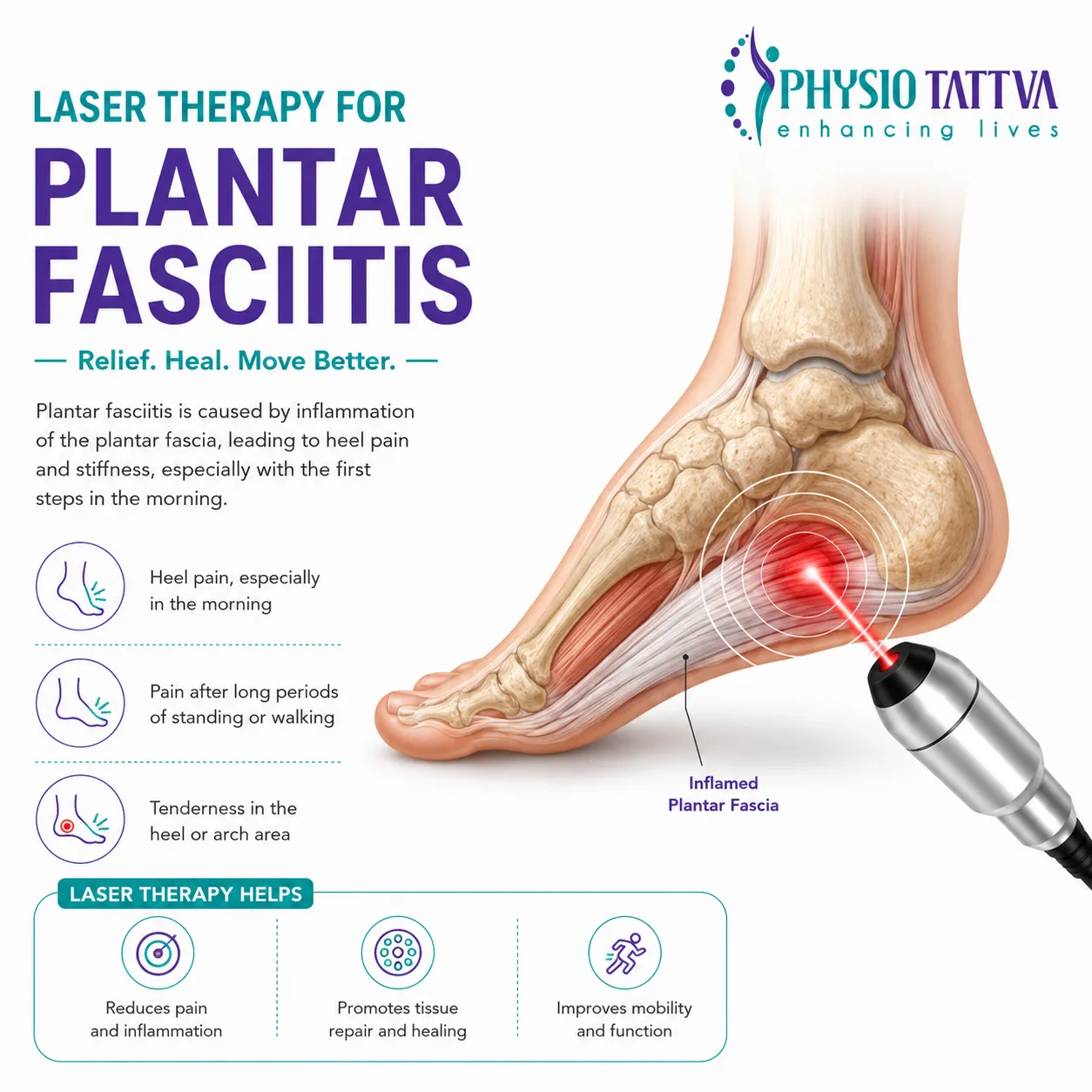
The science behind how laser therapy heals is a process called photobiomodulation. When the high-intensity laser energy is applied to your heel, it triggers a cascade of beneficial biological effects that directly address the root cause of plantar fasciitis pain.
Here’s exactly how it works to provide effective plantar fasciitis treatment:
Reduces Pain & Inflammation
The laser energy has a powerful anti-inflammatory effect. It decreases the production of inflammatory chemicals in the affected area, providing rapid relief from the sharp, persistent pain associated with plantar fasciitis.
Accelerates Tissue Repair
The light energy is absorbed by the mitochondria (the powerhouses) within your cells. This dramatically increases the production of ATP, the body’s cellular energy currency. This supercharges the damaged cells in the plantar fascia, giving them the fuel they need to repair themselves and regenerate healthy tissue much faster.
Improves Blood Circulation
The therapy creates a gentle warming effect that widens blood vessels (vasodilation) in the treatment area. This enhanced blood flow brings a rush of oxygen-rich blood and essential nutrients to the injured fascia while effectively flushing out pain-inducing toxins and waste products.
Reduces Scar Tissue Formation
Chronic inflammation can lead to the formation of stiff, disorganized scar tissue, which can limit flexibility and cause recurring pain. Laser therapy helps promote a more organized and functional healing process, ensuring the new tissue is strong and flexible, not rigid.
When Is Laser Therapy Recommended For Plantar Fasciitis?
Laser therapy is usually considered when heel pain is persistent and affecting daily walking, but surgery or invasive treatment is not immediately required. A physiotherapist evaluates pain pattern, tissue irritation, and activity limitations before recommending treatment.
Laser Therapy May Help In:
Laser therapy may be useful in the following situations:
- Morning heel pain during first steps after rest
- Pain after prolonged standing or walking
- Chronic plantar fasciitis not improving with home care
- Difficulty walking barefoot on hard surfaces
- Heel pain preventing rehabilitation exercises
- Recurrent flare-ups during activity or sports
May Not Be First-Line Treatment In:
Laser therapy may not be the primary option in certain medical conditions:
- Foot fractures requiring immobilisation
- Active infection in the foot or heel region
- Complete plantar fascia rupture
- Severe nerve compression causing numbness or weakness
Who Is A Good Candidate For Laser Therapy?
Laser therapy may be suitable for individuals whose heel pain is limiting daily activities or participation in rehabilitation exercises, and who prefer a non-invasive treatment approach.
- People with persistent heel pain from plantar fasciitis
- Runners or athletes with overuse-related foot strain
- Individuals who stand for long hours at work
- Patients looking to avoid injections or invasive procedures
- Those needing pain control to perform physiotherapy exercises comfortably
What Benefits Can Laser Therapy Provide for Heel Pain?
Laser therapy is used to support recovery in plantar fasciitis by reducing tissue irritation and improving foot movement over time. The goal is to make walking more comfortable and help patients participate in rehabilitation exercises.
- Pain Relief: Laser therapy may help reduce heel pain by calming irritated tissues and decreasing sensitivity in the affected area. Many patients notice easier first steps in the morning after repeated sessions.
- Reduced Inflammation: The light energy influences inflammatory activity within the plantar fascia. As swelling decreases, pressure on surrounding structures reduces, allowing the heel to tolerate weight-bearing better.
- Improved Foot Movement: By reducing stiffness in the fascia, the foot can move more freely during walking. This helps improve gait pattern and decreases limping caused by protective pain behaviour.
- Better Response To Physiotherapy Exercises: Lower pain levels make stretching and strengthening exercises easier to perform, which is essential for long-term recovery in plantar fasciitis rehabilitation.
- Gradual Functional Improvement: Over multiple sessions, patients often experience improved walking tolerance, reduced post-activity discomfort, and better participation in daily activities.
What Happens During A Laser Therapy Session?
Laser therapy is a short outpatient physiotherapy procedure designed to target the painful heel area safely and comfortably. Each step is structured to ensure accurate treatment and monitor your response.
- The physiotherapist evaluates foot movement, tenderness, and walking patterns
- The heel area is positioned to allow precise laser application
- Laser settings are adjusted based on tissue depth and pain sensitivity
- Light energy is applied to the affected area for approximately 5–10 minutes
- You may feel a gentle warmth or mild tingling sensation during treatment
- The therapist checks walking comfort and pain response after the session
How Long Does It Take To See Results With Laser Therapy For Plantar Fasciitis?
Laser therapy improves symptoms gradually as inflammation reduces and the plantar fascia tolerates weight-bearing better. The timeline varies based on how long the condition has been present and daily activity levels.
- Early relief: Mild reduction in heel pain may be noticed within the first few sessions
- Walking comfort: Standing and first-step pain typically become easier over 1–2 weeks
- Functional improvement: Flexibility and walking tolerance improve progressively during treatment
- Full recovery support: Rehabilitation exercises become easier as pain decreases
- Treatment course: Most patients require multiple sessions, adjusted according to severity and response
How To Prepare Before Laser Therapy For Plantar Fasciitis Treatment?
Proper preparation helps laser therapy target the inflamed plantar fascia accurately and improves healing response. Following simple precautions before each session also reduces temporary irritation and allows consistent treatment progress.
- Wear open or loose footwear so the heel is easily accessible
- Avoid applying creams, oils, or ointments on the treatment area before the session
- Stay well hydrated to support circulation and tissue response
- Inform the physiotherapist about medications, diabetes, or previous foot injuries
- Avoid heavy activity just before the appointment to prevent temporary irritation
- Carry previous reports or scans if available
Is Laser Therapy Safe For Plantar Fasciitis?
Laser therapy is generally considered safe when performed by a trained physiotherapist using appropriate clinical settings. It is non-invasive and does not involve injections, cuts, or tissue damage.
Most patients experience only a mild warming sensation during treatment, and normal activities can usually be resumed immediately after the session.
When Extra Caution Is Needed
Laser therapy may require modification or medical clearance in certain situations:
- Reduced sensation in the foot (for example, diabetic neuropathy)
- Pregnancy (avoid application over the abdomen or lower back areas)
- Active infection or open wounds near the treatment site
- History of cancer in the treatment region
- Use of photosensitive medications
A physiotherapist will review medical history and adjust treatment safely before starting therapy.
How Treatment Is Planned At Physiotattva
Laser therapy works best when combined with structured rehabilitation. At Physiotattva, treatment is planned after assessing movement, pain source, and functional limitation rather than applying therapy alone.
Step-by-Step Treatment Process
- Clinical Assessment: A physiotherapist evaluates pain location, movement pattern, gait mechanics, swelling, and tissue sensitivity to confirm diagnosis and rule out conditions needing medical care.
- Personalised Rehabilitation Plan: Laser therapy is combined with manual therapy, mobility exercises, strengthening, and activity modification to address both symptoms and underlying biomechanical causes.
- Laser Therapy Application: A handheld laser probe is applied over the painful area for a short session. The treatment is comfortable and typically produces warmth or no sensation.
- Progressive Treatment Course: Most patients require multiple sessions scheduled across weeks. The plan is adjusted based on pain response, mobility improvement, and functional recovery.
- Ongoing Monitoring: Recovery progress is reviewed regularly, and exercises are progressed gradually to restore normal movement and prevent recurrence.
This comprehensive approach is available at our state-of-the-art physiotherapy in Bangalore and physiotherapy in Hyderabad clinics.
Restore Comfort and Mobility with Expert Care at Physiotattva
Plantar fasciitis doesn't have to be a chronic struggle that dictates your daily life. High-Intensity Laser Therapy offers a powerful, clinically proven, and fast-acting approach to healing heel pain at its source. As the laser boosts cellular repair and reduces inflammation, mobility improves naturally and sustainably. This therapy is integrated into a tailored physiotherapy program designed to deliver lasting relief and help you return to pain-free movement with confidence.
At Physiotattva physiotherapy clinics in Bangalore and Hyderabad, you receive personalised care tailored to your specific needs, ensuring effective results and comfort throughout your journey to recovery.
Don’t wait to start your recovery! Get in touch with Physiotattva for more details! Contact us at +91 89510 47001.
Key Takeaways
Laser therapy can be an effective part of a structured plantar fasciitis rehabilitation program when selected appropriately. The points below summarise its clinical role and practical expectations:
- Laser therapy helps manage inflammatory heel pain by calming irritated plantar fascia tissue and improving local healing response.
- It works best for early to moderate plantar fasciitis or persistent heel pain not responding to home care.
- The treatment is non-invasive, comfortable, and allows immediate return to daily activities.
- Improvement typically develops over multiple sessions rather than after a single visit.
- It may be preferred by patients looking to avoid injections or reduce reliance on pain medication.
- Chronic degenerative cases may require additional treatments such as shockwave therapy alongside rehabilitation.
- A proper physiotherapy assessment is essential to confirm the diagnosis and choose the right combination of therapies.
Why Physiotattva?
22+
50,000+
95%
200+
25+
4.8
Cities We Serve

Bangalore
At Physio Tattva, we are committed to bring access to quality physio care through ultra-modern clinics and high-skilled practitioners to all.
.webp)
Hyderabad
At Physio Tattva, we are committed to bring access to quality physio care through ultra-modern clinics and high-skilled practitioners to all.
.webp)
Vishakhapatnam
At Physio Tattva, we are committed to bring access to quality physio care through ultra-modern clinics and high-skilled practitioners to all.
Core Treatments
Core Conditions
Core Symptoms
Frequently Asked Questions
How many sessions of laser therapy will I need for Plantar Fascitis?

Are there any side effects of laser therapy for Plantar Fascitis?
How soon can I return to my activities after laser therapy for Plantar Fascitis?
Does laser therapy hurt for Plantar Fascitis?
Is laser therapy for Plantar Fasciitis better than Shockwave Therapy?





%20(1)-p-3200.jpeg)


.jpg)
.webp)
.webp)
.webp)