




Physiotherapy Treatment for Foot Pain
Much like the hand and wrist, the foot is often considered a complicated part of the body, comprising of bones, muscles, nerves, and ligaments.
Plantar fasciitis can turn every step into a challenge, but ultrasound therapy offers a gentle, science-backed path to relief. By delivering high-frequency sound waves deep into the injured fascia, ultrasound helps reduce inflammation, ease pain, and speed up tissue repair. It also softens stiff or scarred tissue, making movement more comfortable and preventing recurring flare-ups. At Physiotattva, this treatment is part of a holistic physiotherapy approach that includes personalised assessment, manual techniques, targeted stretches, and footwear guidance for long-term recovery. Sessions are quick, painless, and tailored to your condition. Whether your heel pain is new or chronic, ultrasound therapy helps restore mobility and supports a stronger, healthier foot with every session.
That first step out of bed in the morning should be a gentle start to your day. But for millions, it’s a moment of dread, marked by a sharp, stabbing pain in the heel. If this scenario sounds familiar, you are likely dealing with plantar fasciitis, one of the most common causes of heel pain.
So, what is it? Plantar fasciitis is the inflammation of the plantar fascia, a thick, web-like band of tissue that runs across the bottom of your foot, connecting your heel bone to your toes. This band acts like a shock-absorbing bowstring, supporting the arch of your foot. When it's over-stressed or strained, tiny tears can occur, leading to irritation, inflammation, and that characteristic sharp pain.
Common culprits include overuse from running or standing for long periods, wearing unsupportive footwear, or having certain foot mechanics like flat feet or very high arches. While this pain is common, you don't have to accept it as a permanent part of your life. Effective, modern physiotherapy modalities exist to provide lasting heel pain relief. Among the most effective tools in a physiotherapist’s kit is therapeutic ultrasound, a key component of a comprehensive plantar fasciitis treatment plan.
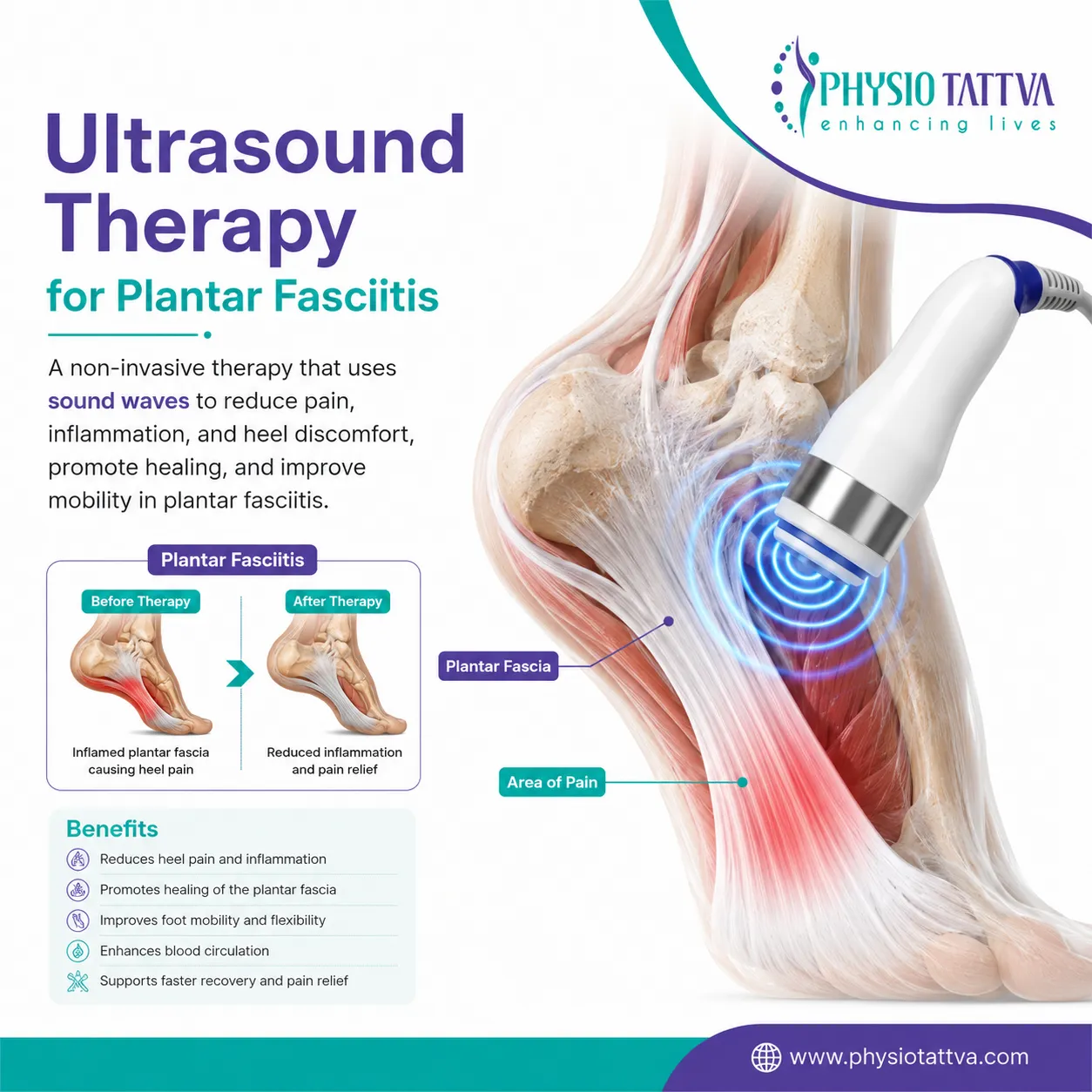
When most people hear the term "ultrasound," they think of the diagnostic imaging used during pregnancy. However, therapeutic ultrasound is entirely different. It doesn't create a picture; instead, it uses the energy of sound waves to promote healing deep within injured tissues.
The science behind it is both simple and brilliant. A physiotherapist uses a small, handheld device called a transducer head, which is applied to your skin over the injured area. This device transmits high-frequency sound waves that penetrate deep below the surface, creating two primary therapeutic effects:
The sound waves cause molecules in your tissues to vibrate, generating a gentle, deep heat. This isn’t like a heating pad that only warms the skin; this heat increases circulation deep at the site of the injury. Enhanced blood flow brings more oxygen and nutrients to the area while flushing away waste products, helping to reduce pain and increase the flexibility of tight tissues.
At a lower setting, the sound waves create a "micro-massage" effect at a cellular level. This process, known as acoustic streaming and cavitation, causes tiny gas bubbles in your tissues to expand and contract rapidly. This agitation helps reduce swelling and inflammation, stimulates cell activity, and accelerates the synthesis of proteins needed for tissue repair.
This dual-action approach is precisely what makes ultrasound therapy for plantar fasciitis such a powerful treatment.
Understanding the science is one thing, but how does it directly help your aching heel? Ultrasound therapy is remarkably effective because it addresses the specific problems caused by plantar fasciitis on multiple fronts.
The primary source of pain in acute plantar fasciitis is inflammation at the point where the fascia inserts into the heel bone. The non-thermal effects of therapeutic ultrasound are excellent for this. The acoustic energy helps to disperse inflammatory substances and reduce swelling around the fascia. By reducing this inflammation, pressure on the surrounding sensitive nerve endings is relieved, providing direct and noticeable pain reduction.
Ultimately, true healing requires repairing the micro-tears in the plantar fascia itself. This is where ultrasound shines. The sound waves stimulate cellular activity, particularly of fibroblasts, the cells responsible for creating collagen. Collagen is the essential protein building block for repairing connective tissues like your fascia. By kick-starting this process, ultrasound therapy helps your body rebuild and strengthen the damaged tissue, addressing the root cause of the problem for long-term recovery.
In chronic cases of plantar fasciitis (lasting more than a few months), the body may have tried to heal by forming scar tissue. This tissue is less flexible and more brittle than healthy fascia, leading to persistent stiffness and a high risk of re-injury. The deep heating (thermal) effect of ultrasound can help to increase the elasticity of this scar tissue. When combined with a targeted stretching program, this makes the fascia more pliable, restoring normal function and reducing morning stiffness.
The idea of a new treatment can be intimidating, but a therapeutic ultrasound session is a simple, comfortable, and professional experience. When you visit a Physiotattva Bangalore or physiotherapy Hyderabad clinic for your heel pain, here’s what the process looks like:
Ultrasound therapy has become a cornerstone of modern plantar fasciitis treatment for several key reasons:
Plantar fasciitis is one of the most common causes of heel pain, but it is also one of the most treatable when managed with the right clinical approach. Ultrasound therapy for plantar fasciitis offers targeted benefits: reduced inflammation, enhanced tissue repair, and improved flexibility of the plantar fascia. These therapeutic effects form the foundation of an evidence-based recovery plan.
Our team of expert physiotehrapists integrates ultrasound therapy with manual techniques, corrective exercises, and biomechanical assessments to ensure every contributing factor is addressed. This holistic strategy not only treats the current pain but also prevents recurrence by strengthening the supporting muscles and improving foot mechanics.
At Physiotattva physiotherapy clinics in Bangalore and Hyderabad, you receive personalised care tailored to your specific needs, ensuring effective results and comfort throughout your journey to recovery.
Don’t wait to start your recovery! Get in touch with Physiotattva for more details! Contact us at +91 89510 47001.

At Physio Tattva, we are committed to bring access to quality physio care through ultra-modern clinics and high-skilled practitioners to all.
.webp)
At Physio Tattva, we are committed to bring access to quality physio care through ultra-modern clinics and high-skilled practitioners to all.
.webp)
At Physio Tattva, we are committed to bring access to quality physio care through ultra-modern clinics and high-skilled practitioners to all.

.webp)









%20(1)-p-3200.jpeg)


.jpg)
.webp)
.webp)
.webp)
