




Aqua therapy is a specialized form of physiotherapy conducted in a temperature-controlled pool to aid rehabilitation and manage symptoms. For individuals with Distal Muscular Dystrophy—a genetic neuromuscular disorder causing progressive weakness in the hands, feet, forearms, and lower legs—aqua therapy provides a low-impact environment to maintain muscle function, improve mobility, and enhance quality of life. This supportive treatment uses the unique properties of water to facilitate movement that might be difficult on land.
What is Distal Muscular Dystrophy? Symptoms and Functional Impact
Before diving into the solution, it's important to understand the condition. Distal Muscular Dystrophy isn't a single disease but a group of rare genetic conditions characterized by progressive muscle weakness. Unlike other forms of muscular dystrophy, these conditions primarily affect the "distal" muscles, those farthest from the center of the body.
Key symptoms often include:
- Weakness in the hands, making fine motor skills like writing or gripping objects difficult.
- Weakness in the feet and lower legs, which can lead to "foot drop," stumbling, or a clumsy gait.
- A gradual progression that can impact independence and daily activities.
While there is currently no cure for DMD, proactive management strategies are essential. Comprehensive physiotherapy for muscle weakness plays a crucial role in maintaining function, slowing progression, and helping individuals live their fullest lives.
How Distal Muscular Dystrophy Affects Mobility and Daily Activities
The gradual decline in muscle strength can significantly impact everyday life.
- Difficulty with tasks requiring grip strength, like opening jars or writing.
- Challenges with walking, including foot drop, leading to trips and falls.
- Reduced balance and coordination.
- General fatigue and decreased endurance.
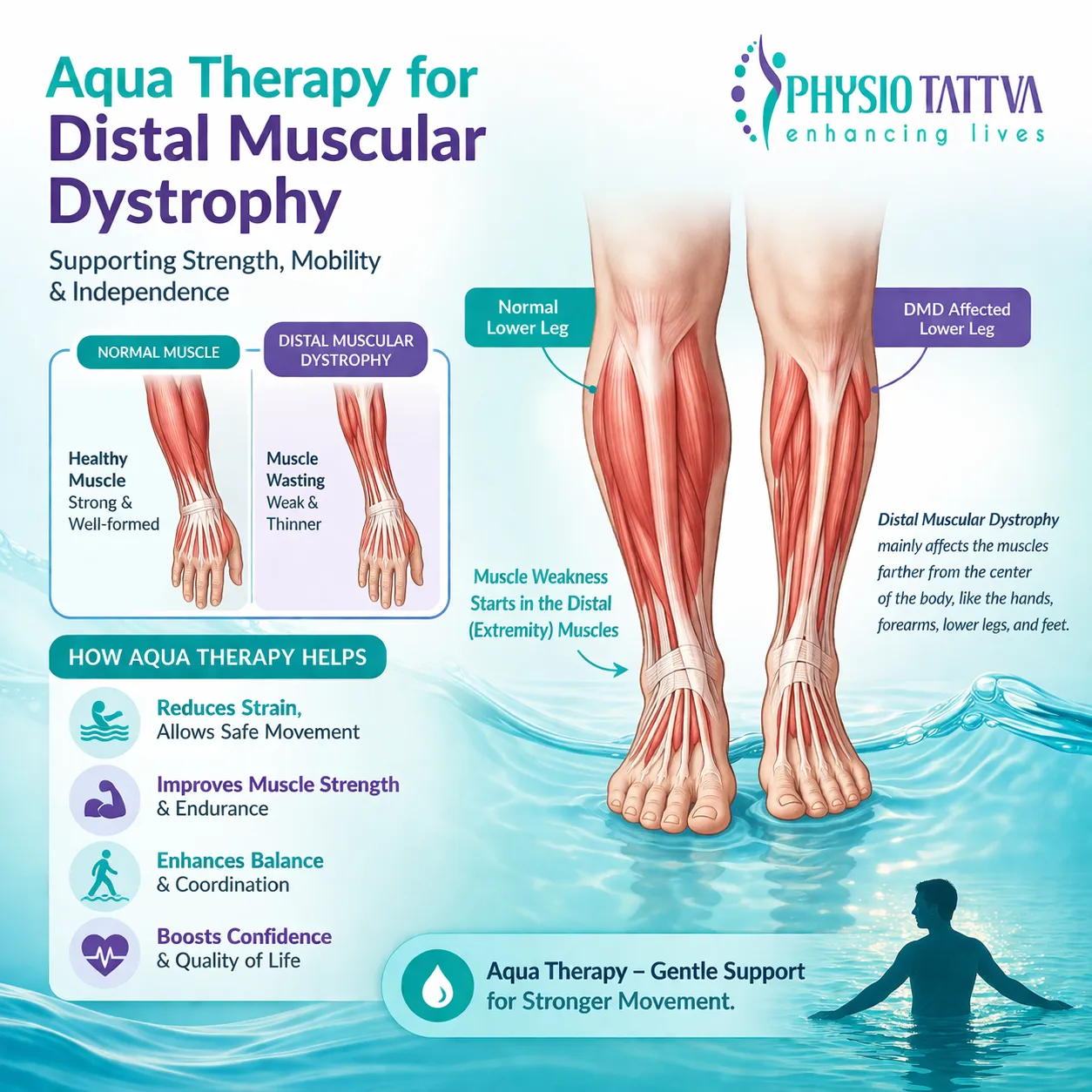
What is Aqua Therapy? Clinical Hydrotherapy for Neuromuscular Care
So, what makes exercising in water so different and effective? The unique properties of water create a therapeutic environment that is nearly impossible to replicate on land. This is the core of hydrotherapy for muscular dystrophy.
How Buoyancy Reduces Joint Stress and Supports Movement?
Water’s most remarkable feature is its ability to counteract gravity. When submerged to your chest, water supports up to 90% of your body weight. This buoyancy offloads immense stress from weakened muscles and painful joints, making movements that are difficult on land feel easier and safer in the pool. For someone with DMD, this means you can exercise with a greatly reduced risk of strain or injury.
How Hydrostatic Pressure Improves Circulation and Stability?
The pressure that water exerts on your body acts like a gentle, full-body compression wrap. This hydrostatic pressure helps to reduce swelling (edema) in the lower limbs, a common issue for those with mobility challenges. It also improves circulation and enhances your sense of body awareness (proprioception), which is vital for balance and coordination.
How Water Resistance Maintains Muscle Strength Safely?
Water provides natural resistance to movement. Unlike weights, this resistance is accommodating, the faster you move, the more resistance you encounter. This allows you to gently strengthen muscles at your own pace without the jarring impact of land-based exercises, protecting vulnerable muscle fibers from damage.
How Aqua Therapy Supports Muscle Maintenance and Function?
A customised aquatic therapy program offers tangible, life-enhancing benefits that directly address the primary challenges of DMD. The benefits of aquatic therapy are multifaceted, targeting both physical function and overall well-being.
Promotes Gentle Muscle Strengthening and Maintenance
The consistent resistance of water provides a safe and effective way to engage and strengthen distal and core muscles without overloading them. This gentle strengthening is crucial for maintaining existing muscle mass and slowing the rate of functional decline.
Improves Flexibility and Joint Mobility
The warmth of a therapy pool (typically 33-36°C or 92-96°F) helps to relax tight muscles and soothe stiff joints. This allows you to perform stretches and movements with a greater range of motion and significantly less pain, combating the joint contractures that can develop with muscle weakness.
Enhances Balance and Neuromuscular Coordination
The fear of falling can be a major barrier to practicing balance exercises on land. In the water, this fear is virtually eliminated. The supportive environment allows you to safely challenge your balance and coordination, retraining your body’s stability systems in a secure setting.
Reduces Muscle Pain and Spasms Naturally
For many living with muscular dystrophy, muscle pain, soreness, and spasms are a constant reality. The combination of the water’s warmth and its gentle hydrostatic pressure provides a natural analgesic effect, helping to alleviate discomfort and promote muscle relaxation.
Supports Cardiovascular and Respiratory Endurance
Even gentle movement in the water elevates your heart rate, providing a safe cardiovascular workout. Furthermore, the hydrostatic pressure on your chest wall makes your respiratory muscles work slightly harder to breathe, acting as a gentle yet effective workout to maintain lung capacity.
What Happens During an Aqua Therapy Session at Physiotattva?
Stepping into a new therapy program can be daunting, but at Physiotattva, we make the process clear, comfortable, and centered around you. Your journey with aqua therapy for Distal Muscular Dystrophy begins with a thorough initial assessment on land and in the water with one of our certified physiotherapists.
Based on this evaluation, we create a fully personalized plan with specific exercises for your distal myopathy, targeting your unique needs and goals. A typical session involves:
- A gentle warm-up to prepare your muscles.
- A series of specific, supervised exercises, such as targeted leg kicks, gentle walking patterns, balance training, and arm movements to improve grip and strength.
- A cool-down period with assisted stretching to enhance flexibility.
Every movement is performed under the one-on-one supervision of your therapist, ensuring your safety and proper form.
Who is an Ideal Candidate for Aqua Therapy for Distal Muscular Dystrophy?
Aqua therapy is generally suitable for individuals who:
- Are in a stable phase of the condition.
- Have received medical clearance from their doctor.
- Can safely enter and exit the pool with minimal assistance.
- Are looking for a low-impact way to maintain function and manage symptoms.
Who Should Avoid Aqua Therapy? Safety and Contraindications
Certain conditions may make aqua therapy unsafe. You should avoid it if you have:
- Open wounds or skin infections.
- Fever, flu, or contagious diseases.
- Uncontrolled cardiac conditions or severe respiratory compromise.
- Incontinence.
Why Choose Physiotattva for Distal Muscular Dystrophy Rehabilitation?
At Physiotattva, we are committed to providing premium, evidence-based care to help you navigate your journey with Distal Muscular Dystrophy. Our state-of-the-art aquatic therapy facilities are designed with your safety, comfort, and progress in mind. Our specialized physiotherapists in both Bangalore and Hyderabad are expertly trained to design and implement effective aquatic programs for a range of neuromuscular conditions. If you are seeking a comprehensive muscular dystrophy treatment in Hyderabad or Bangalore, our team is here to be your partner.
At Physiotattva physiotherapy clinics in Bangalore and Hyderabad, you receive personalised care tailored to your specific needs, ensuring effective results and comfort throughout your journey to recovery.
Don’t wait to start your recovery! Get in touch with Physiotattva for more details! Contact us at +91 89510 47001.
Why Physiotattva?
22+
50,000+
95%
200+
25+
4.8
Cities We Serve

Bangalore
At Physio Tattva, we are committed to bring access to quality physio care through ultra-modern clinics and high-skilled practitioners to all.
.webp)
Hyderabad
At Physio Tattva, we are committed to bring access to quality physio care through ultra-modern clinics and high-skilled practitioners to all.
.webp)
Vishakhapatnam
At Physio Tattva, we are committed to bring access to quality physio care through ultra-modern clinics and high-skilled practitioners to all.
Core Treatments
Core Conditions
Core Symptoms
Frequently Asked Questions
Is Aqua Therapy Safe for All Stages of Distal Muscular Dystrophy?

How is Aqua Therapy Different from Recreational Swimming?
How Soon Can I Expect Improvement from Aqua Therapy?






%20(1)-p-3200.jpeg)

.jpg)
.webp)
.webp)
.webp)