





Physiotherapy Treatment for Inflammation
Inflammation is targeted as the body’s defense mechanism and will play a major role in the healing procedure.
If you’re dealing with a persistent, nagging ache deep in your buttock—a pain that worsens with sitting and can even radiate down your leg, you may be all too familiar with the frustration of Piriformis Syndrome. Often mistaken for sciatica, this debilitating condition occurs when a small muscle deep in your hip, the piriformis, compresses the sciatic nerve. While targeted stretches and exercises are fundamental to recovery, modern physiotherapy offers powerful tools to accelerate healing. One of the most effective is therapeutic ultrasound, a safe, non-invasive, and scientifically-backed modality for targeting this deep-seated pain. This guide will explain exactly what Piriformis Syndrome is, how ultrasound therapy works to treat it, and what you can expect during a session at Physiotattva.
Before exploring the solution, it's crucial to understand the root cause of your discomfort. Piriformis Syndrome is named after the muscle causing the problem. The piriformis muscle is a small but powerful muscle located deep within the buttock region, behind the gluteus maximus. It runs from your lower spine to the top of your thigh bone and its primary function is to help rotate your hip outward.
Because the sciatic nerve runs directly underneath (and in some people, through) the piriformis muscle, any issues with the muscle can directly impact the nerve. When the piriformis becomes tight, inflamed, or goes into spasm due to overuse, injury, or even prolonged sitting, it can compress this nerve. This compression is what triggers the characteristic pain.
Common symptoms you might experience include:
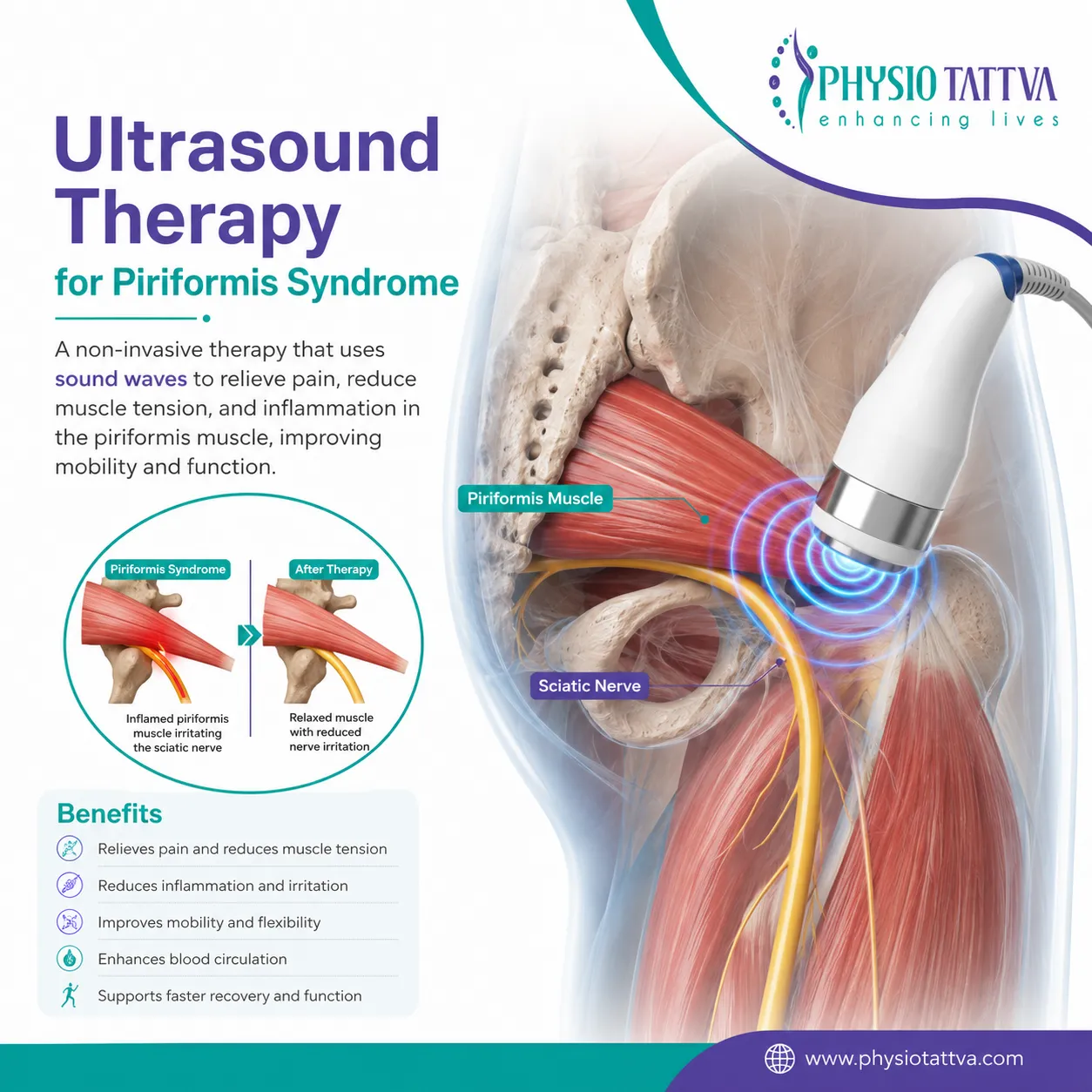
This isn't the same ultrasound used for imaging. Here, we demystify how high-frequency sound waves are used as a powerful healing tool in modern physiotherapy for buttock pain.
It’s important to first distinguish therapeutic ultrasound from the diagnostic kind used to see babies in the womb or visualize internal organs. Therapeutic ultrasound does not create a picture. Instead, it uses sound waves to generate a therapeutic effect deep within the body's tissues. It works primarily through two key mechanisms:
The high-frequency sound waves cause microscopic vibrations in your cells and tissues. This rapid vibration generates a gentle, deep heat far below the surface of your skin. This deep heat therapy is highly effective at increasing blood circulation, which helps flush out inflammatory substances, relax tight muscles, and reduce chronic pain.
The sound waves also create tiny gas bubbles in the tissues that rapidly expand and contract. This process, known as stable cavitation, is believed to stimulate cell membranes and cellular activity (like fibroblast activity). In simpler terms, it kick-starts and accelerates your body's natural healing processes, promoting tissue repair and regeneration at a cellular level.
This is the heart of the matter. We’ll connect the science of ultrasound directly to the relief you’re seeking from Piriformis Syndrome, breaking down its specific advantages. The therapeutic ultrasound benefits for this condition are significant and targeted.
The deep heat generated by ultrasound therapy boosts blood flow to the piriformis muscle. This enhanced circulation delivers a fresh supply of oxygen and nutrients to the area while simultaneously flushing away pain-causing byproducts like lactic acid and prostaglandins. This process effectively reduces inflammation and provides direct pain relief by calming irritated nerve endings.
A key feature of Piriformis Syndrome is a hypertonic, or abnormally tight, piriformis muscle. The thermal effect of ultrasound works as a potent muscle relaxant. By gently warming the muscle fibers, it helps release deep-seated tension and alleviate spasms. This relaxation provides immediate relief from that clenching sensation and, most importantly, reduces the direct pressure on the sciatic nerve.
Piriformis Syndrome can often involve micro-tears or chronic strain within the muscle itself. The non-thermal effects of ultrasound stimulate the cells responsible for creating collagen—the primary protein used to repair soft tissues. This stimulation speeds up the healing of any damaged muscle fibers, leading to a stronger, more resilient piriformis muscle and reducing the likelihood of recurrence.
Chronic inflammation can lead to the formation of scar tissue or adhesions within and around the muscle. This fibrous tissue can restrict movement and contribute to ongoing tightness. Ultrasound therapy works to soften and break down these adhesions, improving the muscle’s flexibility, restoring normal function, and further relieving nerve compression.
Feeling anxious about a new treatment is normal. Here, we walk you through the simple, painless, and professional process of receiving ultrasound therapy at our clinics.
It’s time to move from pain and uncertainty to action and recovery. Let us help you get back to the activities you love, free from piriformis pain.
Piriformis Syndrome is a persistent and painful condition, but it is highly treatable. You don't have to live with the constant discomfort or limit your daily activities. Therapeutic ultrasound is a scientifically backed, advanced modality offered at Physiotattva that can significantly reduce pain and inflammation, alleviate muscle spasms, and speed up your recovery.
At Physiotattva physiotherapy clinics in Bangalore and Hyderabad, you receive personalised care tailored to your specific needs, ensuring effective results and comfort throughout your journey to recovery.
Don’t wait to start your recovery! Get in touch with Physiotattva for more details! Contact us at +91 89510 47001.

At Physio Tattva, we are committed to bring access to quality physio care through ultra-modern clinics and high-skilled practitioners to all.
.webp)
At Physio Tattva, we are committed to bring access to quality physio care through ultra-modern clinics and high-skilled practitioners to all.
.webp)
At Physio Tattva, we are committed to bring access to quality physio care through ultra-modern clinics and high-skilled practitioners to all.










%20(1)-p-3200.jpeg)


.jpg)
.webp)
.webp)
.webp)

