




.webp)
Physiotherapy Treatment for Back Pain
Determining the cause behind back pain is not enough, as you need to focus on multiple treatments and therapies to produce better results.
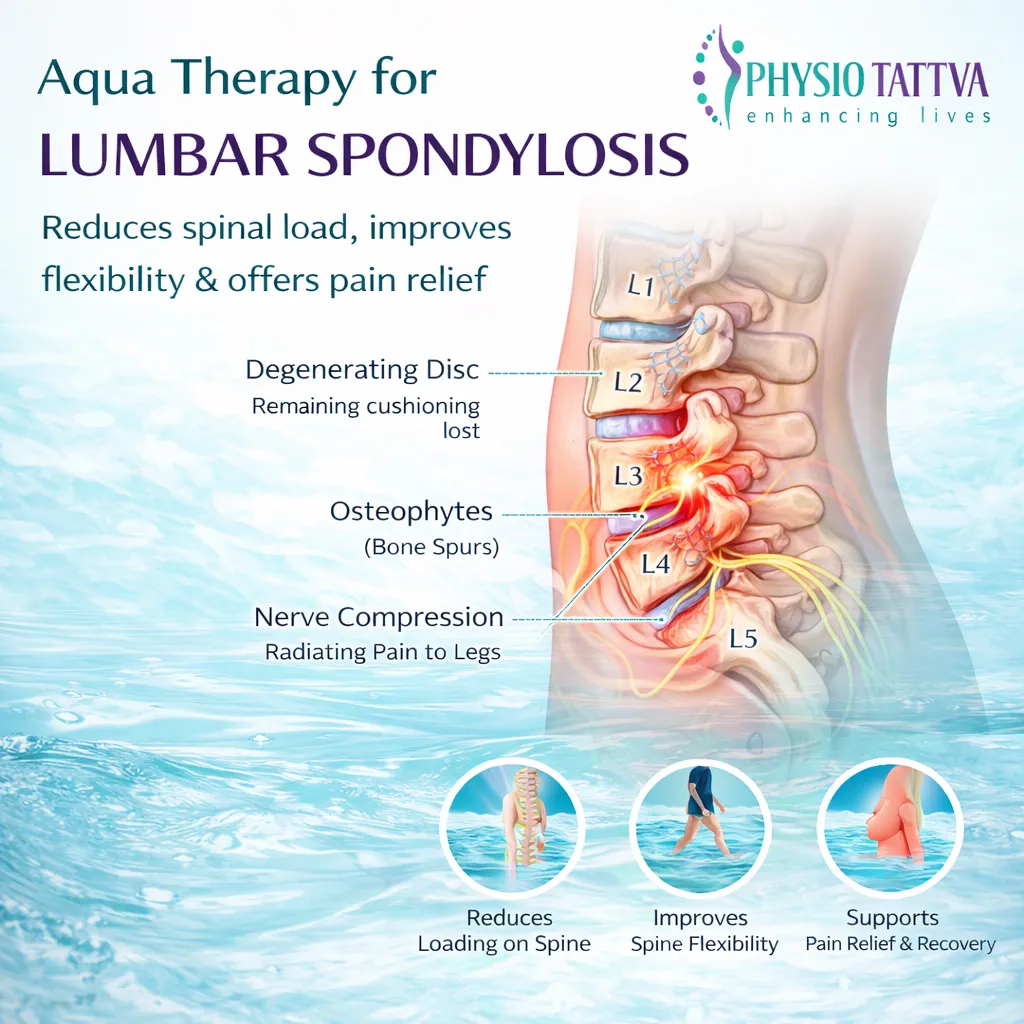
Aqua therapy is a specialized form of physiotherapy performed in a controlled aquatic environment to treat pain and improve function. For individuals with lumbar spondylosis—an age-related degeneration of the spinal discs and joints in the lower back—it offers a gentle yet effective way to manage symptoms like stiffness, chronic pain, and nerve irritation. This low-impact approach uses water's natural properties to support the spine, making it an ideal method for spinal rehabilitation.
Before we dive into the solution, it's essential to understand the condition. This section breaks down what lumbar spondylosis is, its causes, and why it leads to chronic discomfort.
Lumbar spondylosis is an age-related, degenerative "wear and tear" of the vertebrae and discs in the lower back. As we age, these spinal structures can lose their cushioning, leading to friction and pressure. The most common symptoms include localised pain in the lower back, stiffness that is often worse in the morning, and reduced flexibility. In some cases, this degeneration can narrow the spinal canal, leading to nerve compression (stenosis) that causes pain, numbness, or weakness to radiate down the legs. While it's a degenerative condition, its symptoms can be effectively managed with the right physiotherapy.
The chronic pain and stiffness from lumbar spondylosis can significantly limit your ability to perform everyday tasks.
This section introduces the concept of aqua therapy, explaining how this specialised form of physiotherapy uses the unique properties of water for healing and rehabilitation.
Aqua therapy, also known as hydrotherapy, is a form of physiotherapy performed in a specialised, temperature-controlled pool. It’s important to understand that this is not simply swimming or water aerobics. Aqua therapy involves specific, prescribed exercises designed by a trained physiotherapist to meet your individual therapeutic goals. The magic of this treatment lies in harnessing the three core principles of water to create a healing environment: buoyancy, hydrostatic pressure, and viscosity (resistance). These properties work together to make movement easier, safer, and more effective for those with back pain.
Explore the science behind why water is the perfect environment for a spine affected by spondylosis. Learn how its natural properties work in synergy to reduce pain and promote healing.
The most immediate benefit of aqua therapy is buoyancy. When you’re in chest-deep water, it counteracts gravity and supports up to 90% of your body weight. For a spine compressed by spondylosis, this is a game-changer. This "unloading" effect takes the pressure off your lumbar vertebrae and intervertebral discs. The result is a significant, often immediate, reduction in pain. This newfound freedom allows you to perform gentle movements and exercises that would be too painful to attempt on land, kickstarting your journey to improved mobility and function without fear of agitating your condition.
Hydrostatic pressure is the gentle, consistent pressure that water exerts on your body. Imagine it as a full-body compression sock. This natural pressure helps reduce inflammation and swelling (edema) around the affected spinal joints, which is a common source of pain in spondylosis. Furthermore, this pressure aids in improving blood circulation. Enhanced circulation brings more oxygen and vital nutrients to the damaged tissues in your lower back, accelerating the body's natural healing process and helping to clear away waste products that contribute to pain.
At Physiotattva, our hydrotherapy pools are heated to a therapeutic temperature. This warm water works wonders on tight, spasming back muscles, encouraging them to relax and release tension. This soothing effect not only feels good but also increases flexibility and further boosts blood flow. At the same time, water’s viscosity provides 360-degree resistance to your movements. Every step, stretch, and twist is met with gentle opposition, allowing you to strengthen the deep core and back muscles that support your spine. This is achieved without the jarring impact of weights or land-based exercises, making it the ideal way to build a stronger, more resilient back.
Get a glimpse into a typical aqua therapy session. Here are some foundational exercises prescribed by our physiotherapists to target lumbar spondylosis safely and effectively.
Wondering what to expect? This section outlines the patient-centric journey at Physiotattva, from your initial comprehensive assessment to your personalized one-on-one aqua therapy program.
While generally safe, aqua therapy may not be suitable for everyone. You should consult a doctor if you have:
Living with lumbar spondylosis can limit your movement and quality of life, but the right treatment can change everything. Aqua therapy combines pain relief, spinal unloading, and core strengthening in a safe, low-impact environment, making it ideal for chronic back conditions.
At Physiotattva physiotherapy clinics in Bangalore and Hyderabad, you receive personalised care tailored to your specific needs, ensuring effective results and comfort throughout your journey to recovery.
Don’t wait to start your recovery! Get in touch with Physiotattva for more details! Contact us at +91 89510 47001.

At Physio Tattva, we are committed to bring access to quality physio care through ultra-modern clinics and high-skilled practitioners to all.
.webp)
At Physio Tattva, we are committed to bring access to quality physio care through ultra-modern clinics and high-skilled practitioners to all.
.webp)
At Physio Tattva, we are committed to bring access to quality physio care through ultra-modern clinics and high-skilled practitioners to all.




.webp)







%20(1)-p-3200.jpeg)

.jpg)
.webp)
.webp)
.webp)
